
.png "Block Blast")
.jpeg "Tetris")
.jpeg "Bricky Blast")
.jpeg "Block Blast 2048")


.jpeg "Suika Game")
.jpeg "Bubble Shooter")



.jpeg "Block Blast 3D")


.jpeg "Big Block Blast")
.jpeg "Woodoku")
.png "Block Jam")


.jpeg "Tic Tac Toe")

.jpeg "Four Colors")


.jpeg "Bloxorz")


.jpeg "Fruit Ninja")

.jpeg "Sudoku")
.jpeg "Draw Climber")
.jpeg "Cut The Rope")

.jpeg "Block Slide")

.jpeg "2048")
.jpeg "Block Mania")


.jpeg "Stacktris")

.png "Sandtrix")
.jpeg "Falling Blocks Puzzle")


.jpeg "Food Blocks Puzzle")



.jpeg "Element Blocks")




Sudoku
The History of Sudoku
Although many believe Sudoku originated in Japan, its roots actually date back to the late 18th century. The game concept first appeared in a Swiss newspaper as a "number placement puzzle" before evolving into the familiar 9x9 grid we know today. When it reached Japan in the 1980s, it was renamed Sudoku, short for Suji wa dokushin ni kagiru, meaning "numbers must be single." Since then, Sudoku has become a global sensation, appearing in newspapers, apps, and online platforms worldwide.
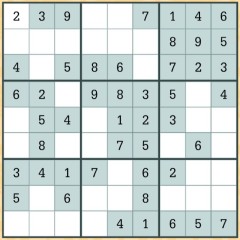
The rules to conquer Sudoku
No repeat number in a row or column
Your mission is to fill the 9x9 grid so that every row, column, and 3x3 square contains all numbers from 1 to 9. The challenge is that no number can repeat within any row, column, or box.
Deduce the rest
The puzzle starts with a few numbers already in place, and your task is to deduce the rest logically. Each move builds upon the last, creating a satisfying chain of discoveries as the puzzle unfolds.
Is Sudoku Healthy for the Brain?
Yes, many players assert that playing Sudoku regularly is like taking your brain to the gym. Some advantages of enjoying this puzzle game:
- Improve memory: keeping track of numbers and possibilities strengthens short-term recall.
- Enhance concentration: it trains your mind to stay focused for extended periods.
- Relieve stress: many players find Sudoku calming and therapeutic, much.
That is why educators and neuroscientists alike recommend Sudoku as a daily brain exercise for all ages.
Two Tricks to Solve Sudoku Faster
There is no one magic formula, but I have two useful strategies for you:
- It is better to fill in rows, columns, or boxes with the fewest missing numbers.
- You should remember that new placements often reveal patterns you could not see before.
So next time you want to challenge your mind and relax your soul, open a Sudoku grid in https://blockyblastpuzzle.io and let the numbers guide you into a world of calm concentration.